2011年1月10日 星期一

insulin

  1. Basic Insulin Regimen
    適合剛用insulin的人, 不想打太多次的人, 中午不想打的人, 飲食規律固定的人, 早餐跟晚餐間隔<10~12hr的人...
    • Daily insulin glargine w/ OAD
    • 適合 fasting sugar↑, 白天sugar較穩定的人 起始dose: 0.1~0.2 U/kg glargine @ 清晨 or 睡前. 也可直接以10U開始 每4~7天調2~5U,直到 fasting glucose 約為 120mg/dl 左右 OAD: 可續吃 esp. SU + sensitizer 有幫助
    • Daily split-mixed or premixed insulin
    • 適合 prandial ↑, 白天sugar特高, 願意打兩次, 要打NovoMix的... 起始dose: 0.3~0.5 U/kg (2/3 早餐打, 1/3 晚餐打) 最好混合 rapid-acting 的,考慮 RI: 價錢不行, 常吃甜點, 素食者. 怎麼混看各人囉 .. 高醫去年好像是 NovoMix (70/30) OAD: 不一定要續吃, 但通常留一顆sensitizer
  2. Advanced Insulin Regimen適合 Type I. 及 Type II 想更精確控制血糖的人
    Basal用 insulin glargine, bolus 用rapid-acting
    起始dose: 0.3~0.7U/kg (小麻4e: 0.5*BW) Basal/bolus 各半
  3. Basic → Advanced Regimen
    • Daily insulin glargine w/ OAD → Advanced Regimen
      研究不多, 目前(2004)的給法有:
      1. 續給 basal, 從prandial 最高的一餐開始給一支bolus
      2. 看HbA1c 總量+10~20%, 再 Basal/bolus 各半, bolus 再分三餐
      當三餐都有打bolus時, DC insulin secretagogue, 續吃 sensitizer
    • Daily split-mixed or premixed → Advanced Regimen
      總量-20% (HbA1c>9% 則-10%) 之後也是 Basal/bolus 各半, bolus 再分三餐
Ref: International Textbook of Diabetes Mellitus (2004) 有點舊啦

會查這是因為看過很多版本, 已前上課的(Daily basal, 還有一說是40U開始..忘了),
馬偕的(很像Advanced), 高榮幹來的講義(Basal/bolus似乎是2:1), 小麻也是一個版本
總之一開始的給法很多,都是expert opinion,就入境隨俗啦
因為每個人insulin resistance 都不同, 也不會有最好的方法
sugar不滿意每次調2U or 4U(真的差很多時)
insulin resistance 太誇張,要survey一下為什麼這麼高
藥物的部分 TZD是禁用的. 會加重 edema, CHF 的副作用

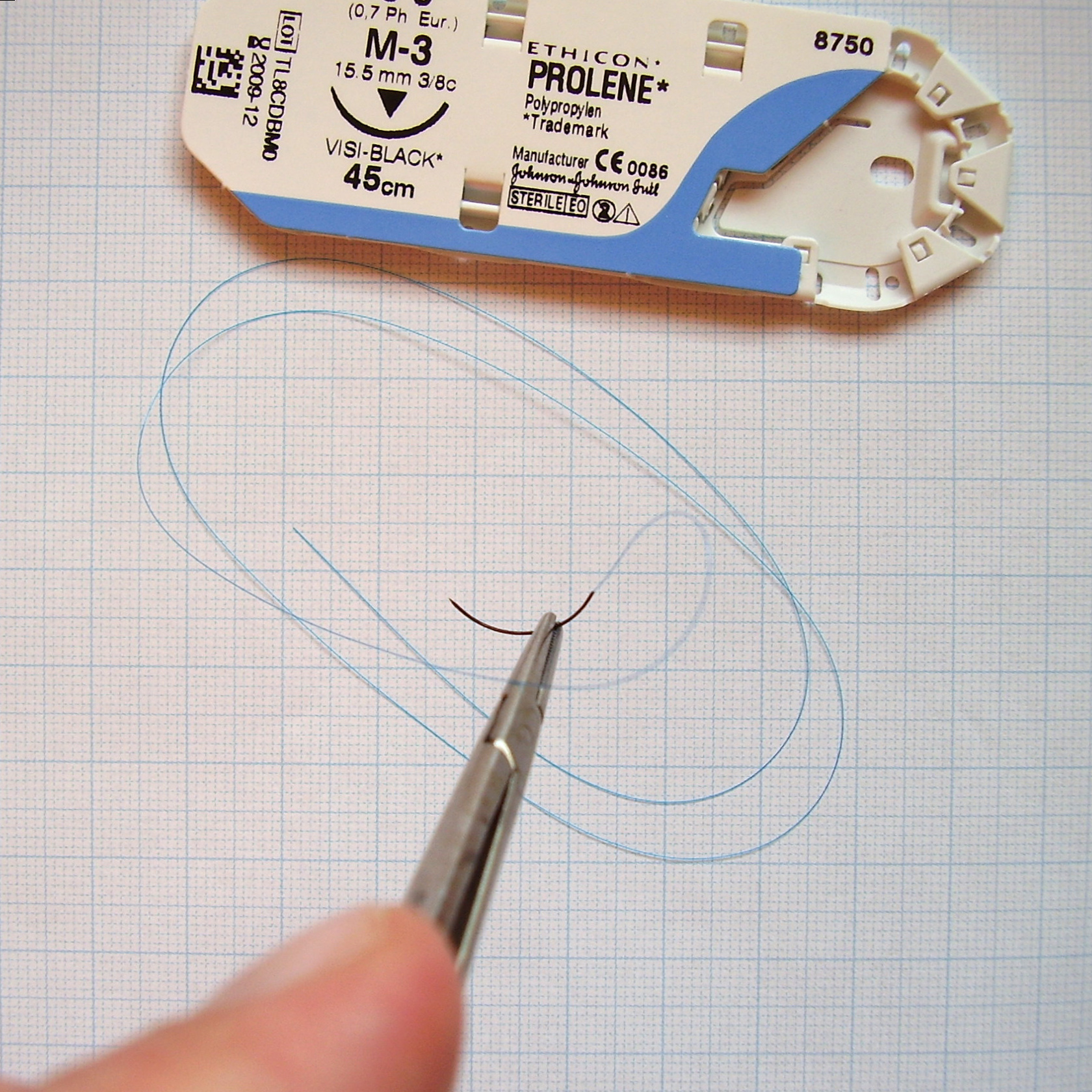
suture

From: Wikipedia - Surgical suture
  1. 清理傷口 要像小姐一樣大力...
  2. 蓋洞巾, irrigation, 三消. 看extend到哪 至少用摸的 照x光可看air, metal
  3. 打local
    之前看一本 臨床小秘笈 : 各科臨床技術的小撇步 還有長庚teaching 說打wound中央
    但 Clinical procedures on emergency medicine 跟學姊是說打進針點
    所以我就combine 目前少量樣本顯示 打wound中央+進針點 病人都不會痛XD 都打那麼多了...
    Clinical procedures on emergency medicine 還提到:
    grossly contamination 不要去碰wound, 但是一般L/W 會在"grossly" contamination還縫起來而嗎? 所以應該是都可以
    打進針點也有兩種方法:沒汙染的從wound邊緣的皮下進入;有汙染的(grossly)不要碰到wound 自wound 旁的皮 斜斜插入
    • local: 2% xylocaine 一般5cc以內。抽local的針跟打的不同,因為抽完針頭可能會頓掉。三消到一半可先打local,不一定要消完再打,病人不適會稍微少些
    • 小孩可能要先讓她睡著(sedation)
    • digital block: 手指nerve從兩旁走 所以兩邊手指跟部各打一次(1~2cc);而 youtube 上的影片是,從指背入,碰到骨頭收回1mm 再往左往右打。不管怎樣,注意不要打到血管,打得對皮膚會腫起來
    • 而 Emerg Med J 2010 Jul; 27:533. 提到了種新方法:再指頭最靠近手掌的指節的掌側,打2~3ml的local,但是這篇paper也提到他沒法收到預計的500人 且較遠的部份可能會麻不夠
    a single SC inj. of 2~3 mL of local anesthetic on the palmar surface at the base of the digit just distal to the proximal skin crease, followed by massage of the anesthetic into the area. because this method does not block the dorsal branches of the digital nerve, it might be less effective for injuries proximal to the distal-interphalangeal joint.
  4. suture (多出自長庚teaching)
    線:
    • 常用 3-0, 4-0.
    • 臉多用5-0, 6-0, 舌3-0,
    • oral mucosa用軟線.
    • scalp 年輕人3-0, 老人小孩4-0 (但馬偕都2-0) 線留長些.
    • 皮下之下用 dexon, vicryl (multifilament, absorbable 約30天)

    • scalp可用頭髮綁,之後再用tissue adhesive. indication: 符合下列條件:1)頭髮要夠長 2) 邊緣不可有挫傷 3) 無 grossly contamination 4) 已止血 5) 未傷到 galea (occipitofrontalis aponeurosis) 6) skull 沒有 fx
      但如果要打local確認wound下方組織,那還是suture起來的好(Clinical procedures on emergency medicine 及 Ann Emerg Med 2002; 40:19)

    持針: 在 Clinical procedures on emergency medicine 及 NEJM 2006;355;17 都建議用 open 拿法,食指去壓持針器的"關節" 用食指控制方向

    入針: 拿在距離線端1/2~1/3處. 針頭與皮膚成90度. 用forcep 去evert時,只能用一邊撐著 兩邊夾下去會傷害組織. 針到中央,再從中央拿針,用forcep evert另一側面 再繼續
    深度要大於寬度 底部要比表皮寬 間距=寬度

    傷口小其實不一定要用forcep, 這樣反而很卡
    一針到底~ 可用大拇指去壓對側皮膚 也可evert 但要小心被刺到
    出針後 用力拉起線的兩端 也可有 evert的效果 但也不要太緊@.@

    打結至少4個
    nylon, prolene易鬆脫 要多打幾個結

    剪刀: 一樣用食指壓 姆指向前 其他向後

  5. 拆線: 臉5~7天 身體10~14天 手掌>2wks, hip&knee 要很久

2011年1月2日 星期日

Shock

EMPIRICAL CRITERIA FOR DIAGNOSIS OF CIRCULATORY SHOCK** Regardless of cause. Four criteria should be met.
Ill appearance or altered mental status
Heart rate >100 beats/min
Respiratory rate >20 breaths/min or Paco2 <32>4 mM/L
Urine output <0.5>20 minutes duration

DEFINITIONS AND CRITERIA FOR SEPTIC, HEMORRHAGIC, AND CARDIOGENIC SHOCK
  • Septic Shock
    • Systemic Inflammatory Response Syndrome (SIRS)
    • 有兩個以上:
      1) Temperature >38℃ or <36℃>90 beats/min
      3) RR >20 breaths/min or Paco2 <32>12,000/mm3, <4000/mm3,>10% band neutrophilia
    • Severe Sepsis
    • SIRS + suspected or confirmed infection + associated with organ dysfunction or hypotension; organ dysfunction may include presence of lactic acidosis, oliguria, or altered mental status
    • Septic Shock
      SIRS + suspected or confirmed infection + hypotension despite adequate fluid resuscitation; septic shock should still be diagnosed if vasopressor therapy has normalized blood pressure
  • Hemorrhagic Shock
    • Simple Hemorrhage
      Suspected bleeding + pulse < 100
    • Hemorrhage with Hypoperfusion
      Suspected bleeding + base deficit <−4 mEq/L or persistent pulse >100 beats/min
    • Hemorrhagic Shock
      Suspected bleeding + Circulation Shock

  • Cardiogenic Shock
    • Cardiac Failure
      Clinical evidence of impaired forward flow of the heart, including presence of dyspnea, tachycardia, pulmonary edema, peripheral edema, or cyanosis
    • Cardiogenic Shock
      Cardiac failure + Circulation Shock


CLINICAL MANAGEMENT GUIDELINES FOR FOUR COMMON CAUSES OF SHOCK
  • Hemorrhagic Shock
    1) Ensure adequate ventilation/oxygenation
    2) Provide immediate control of hemorrhage, when possible (e.g., traction for long bone fractures, direct pressure)
    3) Initiate judicious infusion of isotonic crystalloid solution (10–20 mL/kg)
    4) With evidence of poor organ perfusion and 30-minute anticipated delay to hemorrhage control, begin packed red blood cell (PRBC) infusion (5–10 mL/kg)
    5) With suspected central nervous system trauma or Glasgow Coma Scale score <9, immediate PRBC transfusion may be preferable as initial resuscitation fluid
    6) Treat coincident dysrhythmias (e.g., atrial fibrillation with synchronized cardioversion)

  • Cardiogenic Shock
    1) Ameliorate increased work of breathing; provide oxygen and positive end-expiratory pressure (PEEP) for pulmonary edema
    2) Begin vasopressor or inotropic support; norepinephine (0.5 μg/min) and dobutamine (5 μg/kg/min) are common empirical agents
    3) Seek to reverse the insult (e.g., initiate thrombolysis, arrange percutaneous transluminal angioplasty)
    4) Consider intra-aortic balloon pump counterpulsation for refractory shock

  • Septic Shock
    1) Ensure adequate oxygenation; remove work of breathing
    2) Administer 20 mL/kg of crystalloid or 5 mL/kg of colloid, and titrate infusion to adequate central venous pressure and urine output
    3) Begin antimicrobial therapy; attempt surgical drainage or d?bridement
    4) Begin PRBC infusion for hemoglobin < 8 g/dL
    5) If volume restoration fails to improve organ perfusion, begin vasopressor support; initial choice includes dopamine, infused at 5–15 μg/kg/min, or norepinephrine, infused at 0.5 μg/min


Ref: Marx: Rosen's Emergency Medicine, 7th ed. Chp. 4 Shock

2010年12月27日 星期一

On CVC

subclavian v., internal jagular v. 感染及mechanical complication的機率較低
最後要把CVC放到 vena cava 跟 RA 的交界
Internal jagular v. approach
1. 在SCM及clavicle形成的 △ 的頂點,這是 int. jugular v. 跟 brachiocephalic v. 匯流的 anatomical landmark
2. 打local:1~2ml 1% lidocaine, 用25-gauge的針。使病人頭下腳上(Trendelenburg postion),頭往另一側轉45度(轉太超過反而會使v.扁掉)
3. 在1.頂點略上方,carotid pulse旁邊進針。與水平面夾20度,也就是針對著同側乳頭方向進針。約在皮下1.3cm即可戳到v.
4. 戳到靜脈後,留針,把syringe拿起,把guidewire 的J形端插入。rhythm改變時,稍微退回wire直到rhythm回復正常
5. 拔掉針頭,切個約1~2mm的切口。放dilator擴張後拿掉,再把CVC延wire放入,然後移除guidewire,確認血流正常,然後sterile dressing

Ref: N Engl J Med 2007;356;e21

2010年12月25日 星期六

插胸管

Indication: -thorax
(Relative) Contraindication: bleeding diseases, coagulopathy. 可以的話先校正(ex. FFP, PLT)
Chest tube size: (stable)16-22Fr (unstable)24-28Fr

步驟
1. 可以的話先告知,prepare,sedation
2. Position: supine, semirecumbent. 手放頭後or外展
3. incision:4th~6th intercostal space & ant. axillary line 交界。胸管要放到 Triangle of safety(pectoralis major, latissimus dorsi, nipple horizontal) *放胸管的地方會在incision上方的肋間歐。
4. 打local: 1% or 2% lidocaine. 先用25-gauge的針,碰到rib打出個wheal,再用21-gauge的針,碰到rib往上(也就是進到上一個肋間)打更下層的SC, pleural space. 可反抽,若有血水(hemothorax)或空氣(pneumothorax)表示已經到pleural space了,把剩下的lidocaine打進去。total dose 約在10~20ml.
5. 沿 rib 切個約1.5~2cm的開口。用Kelly 往上一肋間,對SC layer, intercostal m. 做blunt dissection。

(待續)

2010年12月20日 星期一

Beckwith-Wiedemann Syndrome

  1. Beckwith-Wiedemann syndrome (BWS): The association of macrosomia (88%, enlarged body size: birth weight > 90%, ↑postnatal growth), macroglossia (97%, enlarged tongue大舌), and omphalocele(80%, 臍膨出).
  2. Other associated findings include mild facial dysmorphism (hypertelorism, unusual ear creases), infantile hypoglycemia due to transient hyperinsulinemia (63%, due to pancreatic hyperplasia), multiple congenital anomalies (cleft palate and genitourinary anomalies common), hemihyperplasia (asymmetrical overgrowth of a limb or one side of the face or trunk), and umbilical hernia, gigantism(巨人症), fetal adrenocortical cytomegaly, and large kidneys with medullary dysplasia.…
  3. 和PMH有很大的關係:Placental mesenchymal hyperplasia (PMH)
    1. a rare placental anomaly characterized by: (1) placentomegaly, (2) dilated chorionic plate vessels, and (3) grape-like vesicles, which are dilated villi.
    2. PMH may be associated with an uneventful pregnancy and normal fetus. However, it may also be associated with clinically important fetal sequelae that include fetal growth restriction, intrauterine death, preterm delivery, fetal anomalies, fetal anemia, and a high association with BWS.
    3. BWS的母親可能會有:Viseromegaly, placentomegaly
  4. Related to abnormal expression of genes located at chromosome 11p15.5, sporadic major, possibly familial.
    1. 在11p上有一些基因imprint於其上,可能是從父親(paternally)或母親(maternally)傳下來的。目前找到了兩個地方,叫做differentially methylated regions (DMRs),可稱為DMR1, DMR2。
    2. 染色體的異常會影響基因的表現:A growth factor gene, IGF2, is imprinted in DMR1。而母方的allele基本上在intrauterine development時是不表現的(inactive),但父方則否(paternally active),所以正常人只有一份active。若異常使得父方(paternal) 11p15 region做了兩份(約20~30%的病人是這種情形,叫作uniparental disomy),或是母方的imprint丟失,這會使active IGF2 gene效果加倍!! IGF2在fetal development時製造增加,所以BWS的小孩會overgrowth。
    3. 而50~60%的病人是因為失去了父親的(paternal) imprint of DMR2(包含如KCNQ1, CDKN1C之類的基因),這會silence掉growth inhibitors,這樣解釋小孩也會overgrowth且得到tumor的機會會增加,然而詳細的機轉仍不明。
    4. 而BWS也跟Paternal UPD有關,Paternal UPD可能會導致H19 不表現,而H19是一個tumor suppressor gene(通常來自母方 maternal homolog)!這樣也可以解釋BWS容易得到癌症的情形,約70% of Wilms tumors from patients with BWS show loss of imprinting of the genes coding for IGF2 and H19.
  5. increased risk for certain malignancies, especially Wilms tumor (7–10%), hepatoblastoma, bilateral pheochromocytomas → 早期發現早期治療
  6. Children affected with BWS should undergo tumor surveillance protocols, including an abdominal ultrasound every 3 months until they reach age 7 years, as diagnosing malignancy at early stages leads to a significant improvement in outcome.
  7. 其他參考資料可參考財團法人罕見疾病基金會:http://www.tfrd.org.tw/rare/typeCont.php?sno=1505&kind_id=15 
Ref:
  1. CURRENT Diagnosis & Treatment: Pediatrics > Chapter 35. Genetics & Dysmorphology > Nonmendelian Disorders > Disorders of Imprinting
  2. Greenspan's Basic & Clinical Endocrinology > Chapter 7. Growth > Disorders of Growth > Tall Stature Due to Nonendocrine Causes > Syndromes of Tall Stature
  3. Greenspan's Basic & Clinical Endocrinology > Chapter 12. Adrenal Medulla & Paraganglia > Pheochromocytoma > Genetic Conditions Associated with Pheochromocytomas & Paragangliomas > Other Genetic Syndromes Associated with Pheochromocytoma
  4. Williams Hematology, 8e > Chapter 10. Genomics and Epigenetics > Genomics and Epigenetics > Genomic Imprinting
  5. Williams Obstetrics, 23e Clinical Pearls: Placental Mesenchymal Hyperplasia

2010年12月16日 星期四

Management of Early Morning Hyperglycemia in Patients with Type 1 Disease

在馬偕小兒念到 Dawn phenomenon,恰巧之前也在學長板上看到:

今天才知道早上AC sugar高→調高HS的insulin劑量完全是錯誤的
不該是一個內科醫師該有的行為@@

(雖然我應該沒做過這種事 可是聽起來超級無敵合理的!!!!)
據說AC sugar高的正確動作是半夜三點再測一次

一時興起,查了一下

Somogyi effect: 半夜低血糖會引發回饋,分泌激素使得晨血增高。
Dawn phenomenon: 較常見,因為 insulin 已耗盡。75% Type 1 DM 跟大多數 T2DM 及正常人,因為在入睡時 Growth hormone 被釋放,使得在5~8點時 insulin 的 tissue sensitivity會降低。
Dx: 半夜三點多抽一次血糖
Tx: 可分作幾種情形─A. Waning of circulating insulin levels, B. dawn phenomenon, C. Somogyi effect

  1. Somogyi effect: ↓睡前insulin。
  2. A. or B. or A.+B.:↑basal insulin。用NPH的則建議改成 insulin glargine 上pump的,在4~5點調高 basal infusion rate。可看半夜三點的 sugar 作調整。
  3. A.+B.+C.:書上沒寫,我想應該是 (1) + (2) 吧

Table 18–17. Typical Patterns of Overnight Blood Glucose Levels and Serum Free Immunoreactive Insulin Levels in Prebreakfast Hyperglycemia Due to Various Causes in Patients with Type 1 Diabetes. Blood Glucose Levels (mg/dL) Serum Free Immunoreactive Insulin Levels (μU/mL)
10 PM 3 AM 7 AM 10 PM 3 AM 7 AM
Somogyi effect 90 40 200 High Slightly high Normal
"Dawn phenomenon" 110 110 150 Normal Normal Normal
Waning of circulating insulin levels plus "dawn phenomenon" 110 190 220 Normal Low Low
Waning of circulating insulin levels plus "dawn phenomenon" plus Somogyi effect 110 40 380 High Normal Low
Reference: Greenspan's Basic & Clinical Endocrinology > Chapter 18. Pancreatic Hormones & Diabetes Mellitus

2010年2月7日 星期日

作業系統

目前正在使用的作業系統其實也不少了

  • Windows 7: 桌機用的,老實說灌完到現在還沒當過機耶XD 介面華麗,用起來很舒服
  • xPUD: 號稱是通往雲端的最短路徑!裝在筆電上,開機大概兩分鐘內,不要再酸我的筆電開機要十分鐘了!如果換一張快一點的記憶卡會更快。功能很陽春,但有 Firefox + PCMan add-on 其實這樣就夠了XD 設定可以存,但不會顯示進度,要自己check備份檔案有沒有在變大...存完才可以關
  • ubuntu+LXDE: LXDE是在學期末的時候弄上去的,比起KDE介面,開機要少了半分鐘吧。華麗度普通。整體來講算是在校能跟易用度上橋到了一個平衡。寫程式時會進來。
  • WinXP: 還留在我的筆電上,作文書處理時會用到。
很多人都說Linux比Windows穩,在我看來,只能騙騙外行人。穩不穩要看用途吧!

如果是一般使用者,應該是要一個圖形介面的作業系統。Linux的圖形介面是由無數小工具所建構的,這些小工具合作的結果就反映了系統的穩定度,事實上結果並不是很能讓人滿意!再來,大多數的廠商對於驅動程式的支援仍然很有限,在Linux下看影片的速度,就是比不上 Windows 的流暢。

如果要架 server,那當然是 Unix-like 的作業系統了!被Windows core 吃掉的資源就不知道有多少了,還能留多少資源處理request?在 Unix-like OS,通常架 server 也很少裝不必要的程式,程式少,漏洞自然也較容易掌握,系統效能也會提高。再來是 shell 的魔力,在文字介面下,不同的工具程式 很容易就可以用 pipe 互相結合,加上設定大多以text儲存,管理上方便許多。

所以,實在不要再爭哪個好哪個差了XD

2009年3月30日 星期一

到台南聽演講

透過學姊的廣告,到台南聽了 jserv 大所講的我所知道的 C 語言
帶了弟弟去 不過他應該聽不懂吧XD

收穫很多
pointer, array 語法之類的就算了吧

第一個收穫 就是API
原本我是很喜歡從頭到尾自己來的
練功的確該這樣練 不過開發大型程式 就得要站在前人的肩膀上了
前陣子準備 Ajax 學了些API 也加深了我的感觸

當天的舉例 利用WebKit 放網頁 或是 compile C原始碼成 .swf
讓我想到了 Google Web Toolkit 用 Java 寫 javascript
只能說軟體工程的世界真是越來越有趣了

第二個收穫 物件導向
記得去年剛看 C++ Primer 問了謝哥一個問題
能不能把 FreeBSD 上這些 C 寫的程式改成 C++ 版的
當時謝哥應該是和我說 Unix-like系統就是用這些函式.....................

到現在 C++ 所注重的畢竟和 C 不一樣
C++ 導入物件導向 寫程式變成了一門藝術
而C專注於低階硬體控制
兩者各有所成

而物件導向 應該是種思維
與其責怪為什麼C語言沒有物件導向
不如 把物件的精神灌注在自己的程式之中
畢竟寫程式的人是自己 而不是語言呀

最後 到網路上看了 jserv 大大 到底是怎樣的一位人物
原來不只是個程式設計師 他有自己的一套哲學
生平也算是傳奇了

現在要磨練的不只是programming technique
而是在訓練之中 找出自己的 style
找出一套自己的哲學

2009年3月26日 星期四

思念.致大體老師的最後一封信

度過了數週和老師朝夕相處的日子。

還記得去年拜訪曹阿姨時,我只覺得老師是位很棒的人;甫開學時和老師的第一次親密接觸,心中的震撼就算現在我也不知如何形容;如今,我滿懷感激。

剛考完了第一次考試,雖然結果也很令人震撼,甚至讓人激動落淚。但五週過去,我也學了很多東西,是以前的我難以想像的熟練。這幾週準備時念了多少書呢?加班花了多少時間?不斷地思考構造的名稱變異和特點、一再地複習自修及演示。雖然老師始終不發一語,而千言萬語的名師也遠遠不及,老師彷彿在背後默默地監督著,我們亦戰戰兢兢,從一而終。

不自覺地想到以前別人的批評,我們是踏在別人的屍體上所走過來的。而事實上到現在,已經有太多太多的人幫助我們,你們就是我人生路上的教練。感謝老師,在課堂上空洞的高談闊論外帶給我們對生命更深的體悟。謝謝老師,讓書中的死硬知識彷彿活了起來,讓我們享受一場莊嚴又有深度的饗宴。而我也對不起老師,深深的感受到自己知識的不足,技巧地拙劣,這些日子辛苦老師,讓老師受苦了。剩下最後的五個禮拜,我也會把握和老師最後相處的機會。

寫完這封信,又到了和老師一同上課的時間了。接下來的日子也麻煩老師了!